Solar explorer in only CSS

Planet

Mercury

The closest planet to the sun. It circles the sun faster than all the other planets, which is why Romans named it after their swift-footed messenger god.

Planet

Venus

Named for the Roman goddess of love and beauty. In ancient times, Venus was often thought to be two different stars, the evening star and the morning star.

Moon

Moon

Planet

Earth

Earth, our home. It is the only planet known to have an atmosphere containing free oxygen, oceans of liquid water on its surface, and, of course, life.

Moon

Deimos

Moon

Phoebos

Planet

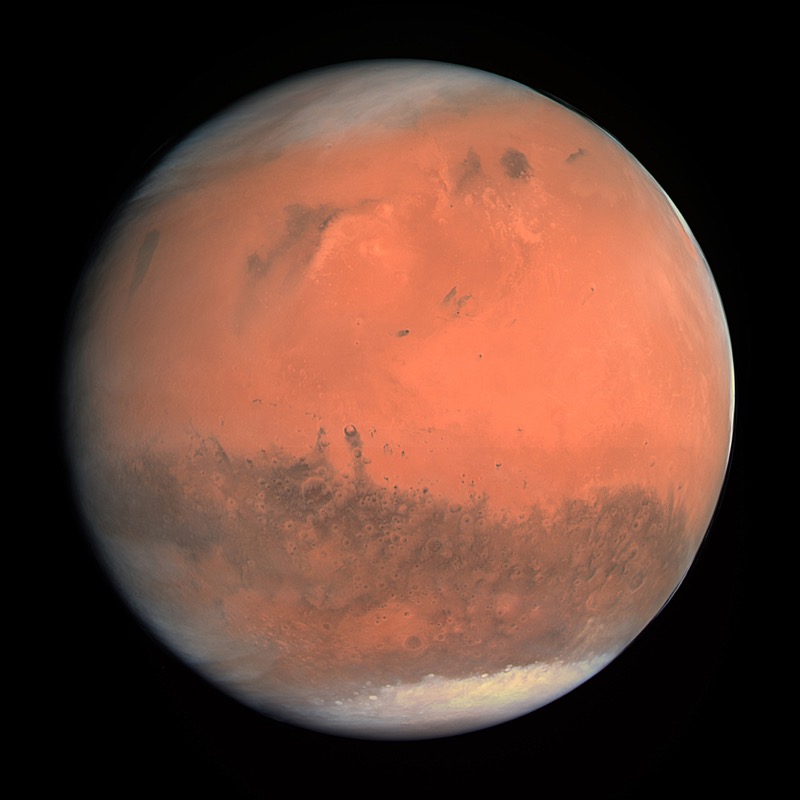
Mars

Fourth planet from the Sun and the second smallest planet in the solar systm. Named after the Roman god of war often described as the “Red Planet”.

Moon

Io

Moon

Europa

Moon

Ganymede

Planet

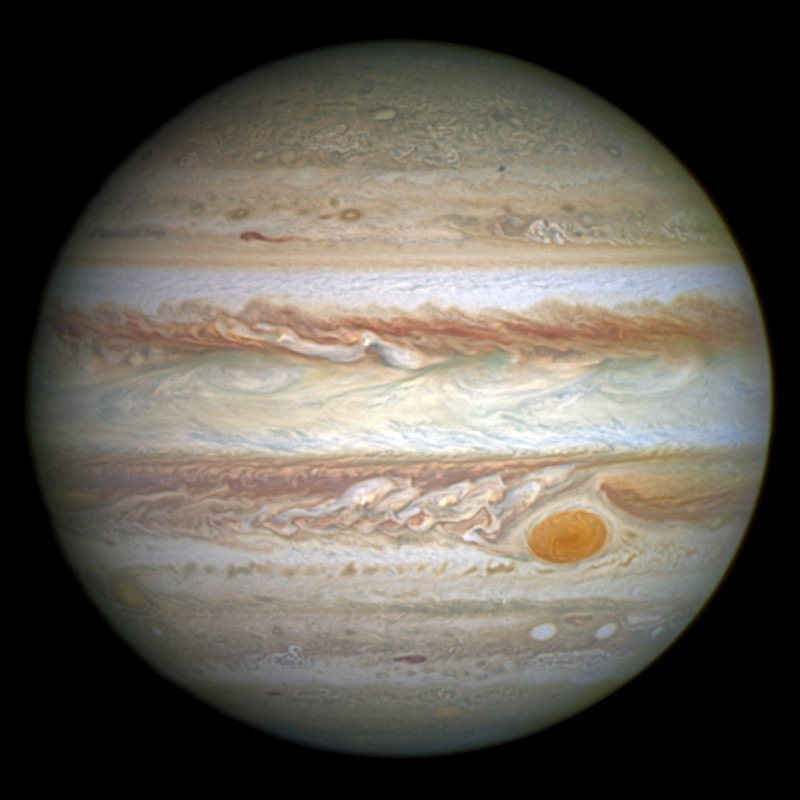
Jupiter

Jupiter is the largest planet in the solar systm. Fittingly, it was named after the king of the gods in Roman mythology.

Moon

Titan

Moon

Dione

Moon

Enceladus

Planet

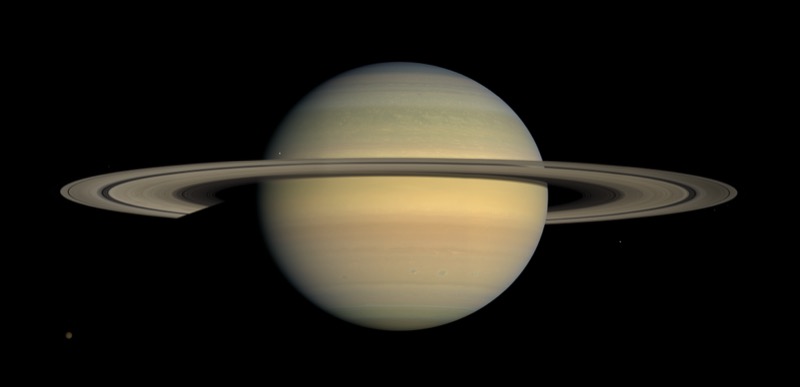
Saturn

Saturn is the sixth planet from the sun and the second largest planet in the solar systm. Saturn was the Roman name for Cronus, the lord of the Titans.

Moon

Miranda

Moon

Ariel

Moon

Umbriel

Planet

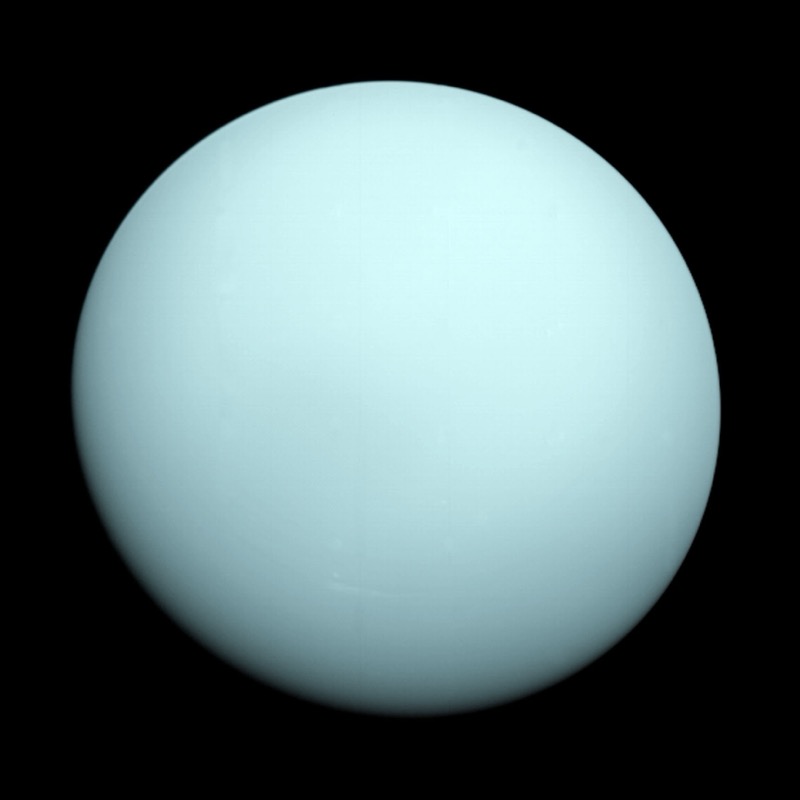
Uranus

The first planet to be discovered by scientists. The planet is notable for its dramatic tilt, which causes its axis to point nearly directly at the sun.

Moon

Triton

Moon

Proteus

Moon

Nereid

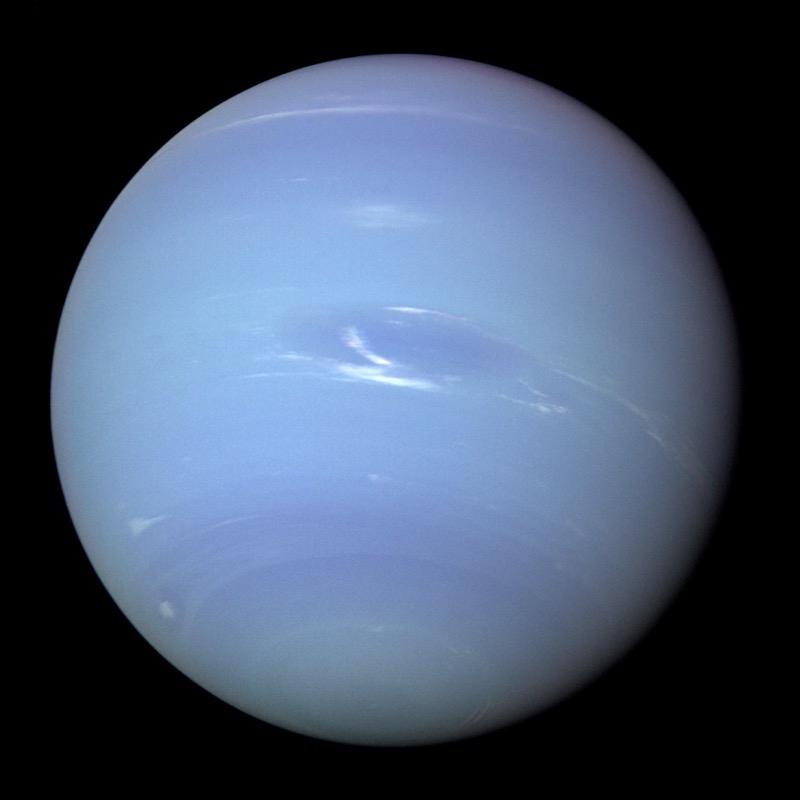
Planet

Neptune

Lorem ipsum dolor sit amet, consectetur adipisicing elit, sed do eiusmod tempor incididunt ut labore et dolore magna aliqua. Ut enim ad minim veniam,

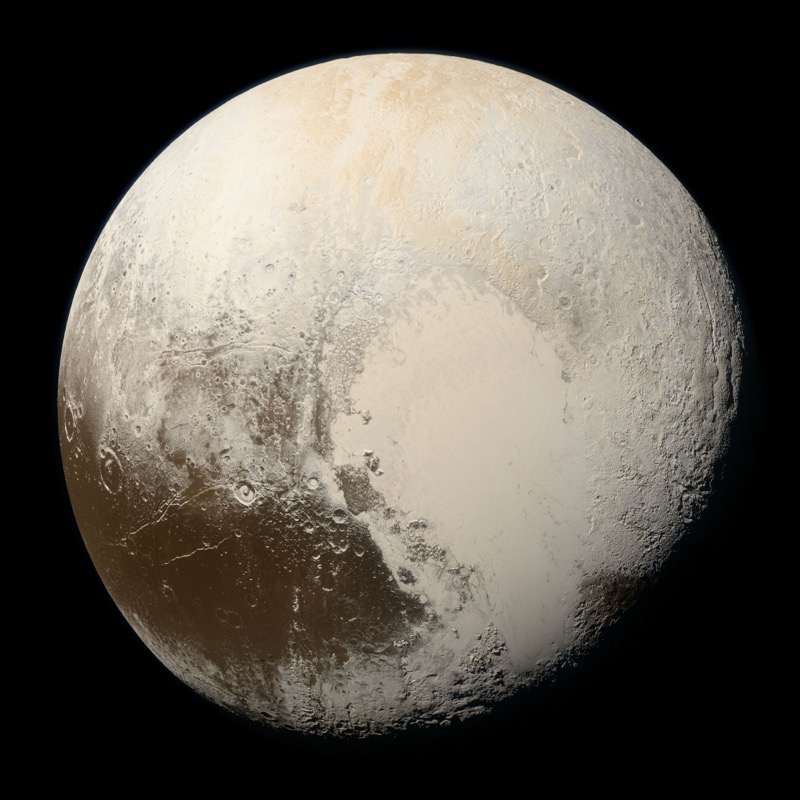
Dwarf planet

Pluto

Pluto, once considered the ninth and most distant planet from the sun, is now the largest known dwarf planet in the solar systm.

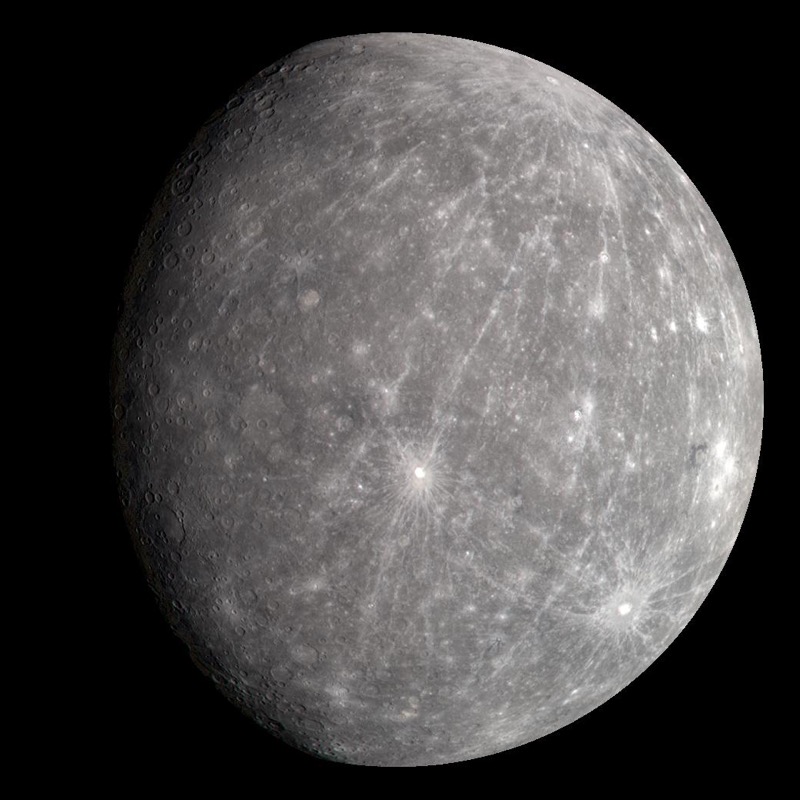
Mercury

Mercury is the closest planet to the sun. As such, it circles the sun faster than all the other planets, which is why Romans named it after their swift-footed messenger god.

The Sumerians also knew of Mercury since at least 5,000 years ago. It was often associated with Nabu, the god of writing. Mercury was also given separate names for its appearance as both a morning star and as an evening star.
Mercury

A year on Mercury is just 88 days long.

One solar day on Mercury lasts the equivalent of 176 Earth days while the sidereal day lasts 59 Earth days. Mercury is nearly tidally locked to the Sun and over time this has slowed the rotation of the planet to almost match its orbit around the Sun.

Mercury is the smallest planet in the Solar System.

Mercury is just 4,879 Kilometres across its equator, compared with 12,742 Kilometres for the Earth.

Mercury is the second densest planet.

Each cubic centimetre has a density of 5.4 grams, with only the Earth having a higher density. This is largely due to Mercury being composed mainly of heavy metals and rock.

Mercury has wrinkles.

As the iron core of the planet cooled and contracted, the surface became wrinkled. Scientists have named these wrinkles, Lobate Scarps. These Scarps can be up to a mile high and hundreds of miles long.
Mercury Specifications

Planet Details

Mass: 3.285 × 10²³ kg (0.055 Earths)

Circumference: 15,329 km

No. of Moons: 0

Climate: Extreme swings, no atmosphere (-180°C to 430°C)

Weight vs Earth: 0.378x (100 kg → 37.8 kg on Mercury)

No. of Rings: 0

Distance from Sun: 57.9 million km (0.387 AU)

Surface Temp: -180°C to 430°C

Diameter: 4,879 km

Orbital Speed: 47.87 km/s

Orbital Period: 88 Earth days

Axial Tilt: 0.034°

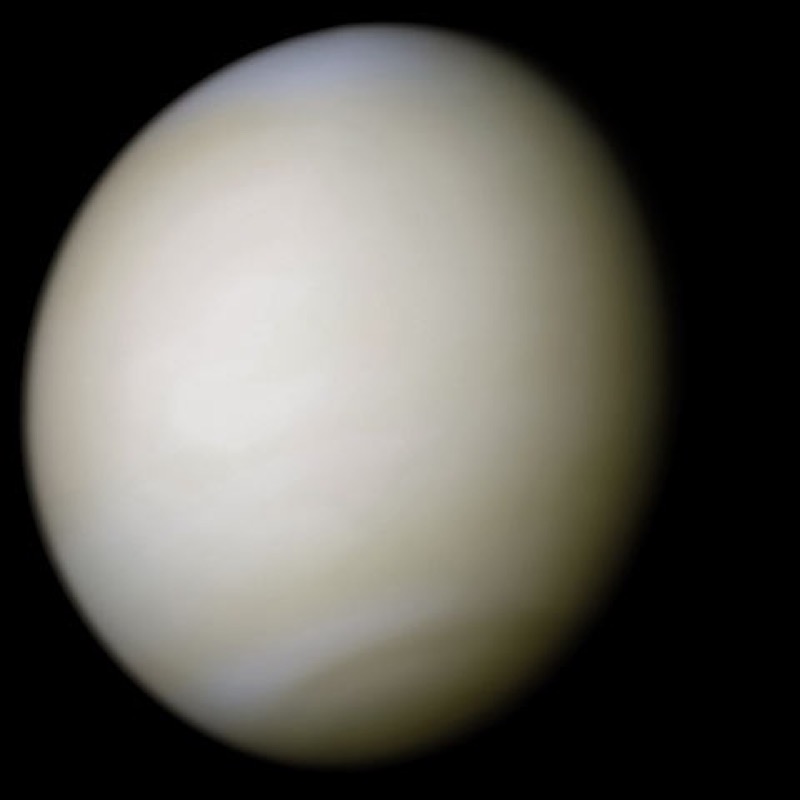
Venus

Venus, the second planet from the sun, is named for the Roman goddess of love and beauty. The planet — the only planet named after a female — may have been named for the most beautiful deity of her pantheon because it shone the brightest of the five planets known to ancient astronomers.

In ancient times, Venus was often thought to be two different stars, the evening star and the morning star. In Latin, they were respectively known as Vesper and Lucifer. Further observations of Venus in the space age show a very hellish environment making it very difficult to observe from up close, because spacecraft do not survive long on its surface.

Venus

A day on Venus lasts longer than a year.

It takes 243 Earth days to rotate once on its axis. The planet's orbit around the Sun takes 225 Earth days. A day on the surface of Venus (solar day) takes 117 Earth days.

Venus rotates in the opposite direction to most other planets.

This means that Venus is rotating in the opposite direction to the Sun, also known as a retrograde rotation. It also differs from most other planets in our solar system by having no natural satellites.

Venus is the second brightest object in the night sky.

Only the Moon is brighter. With a magnitude of between -3.8 to -4.6 Venus is so bright it can be seen during daytime on a clear day.

Atmospheric pressure on Venus is 92 times greater than the Earth's.

While its size and mass are similar to Earth, the small asteroids are crushed when entering its atmosphere, meaning no small craters lie on the surface of the planet.

Venus Specifications

Planet Details

Mass: 4.8675 × 1024 kg (0.815 Earths)

Circumference: 38,025 km

No. of Moons: 0

Climate: Runaway greenhouse, CO₂ & sulfuric acid clouds

Weight vs Earth: 0.904x (100 kg → 90.4 kg on Venus)

No. of Rings: 0

Distance from Sun: 108.2 million km (0.723 AU)

Surface Temp: 465°C / 870°F (hottest planet)

Diameter: 12,104 km

Orbital Speed: 35.02 km/s

Orbital Period: 225 Earth days

Axial Tilt: 177.4° (spins upside down!)

Earth

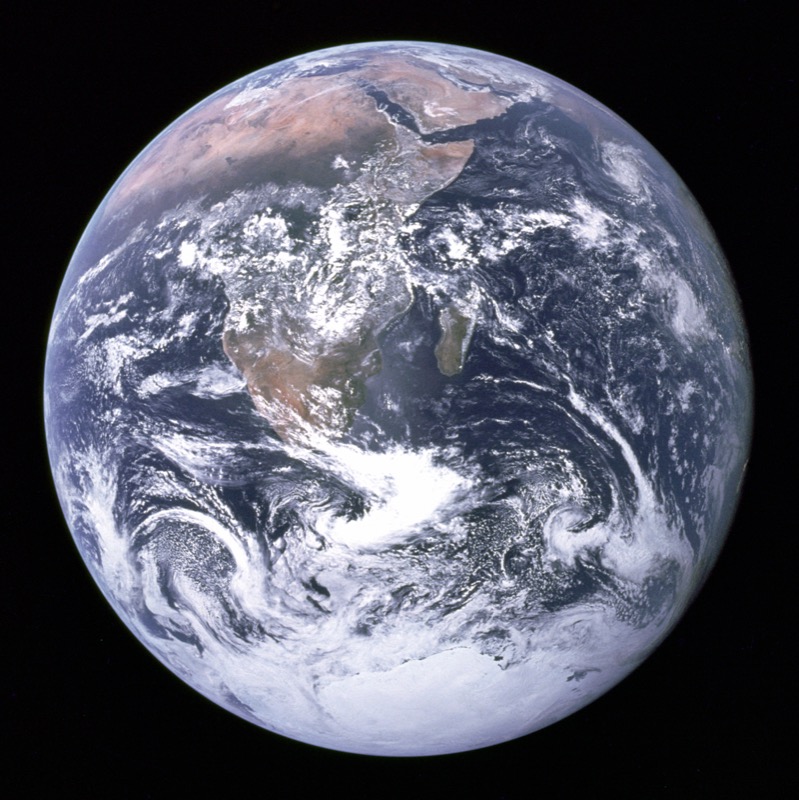
Earth, our home, is the third planet from the sun. It is the only planet known to have an atmosphere containing free oxygen, oceans of liquid water on its surface, and, of course, life.

Earth is the fifth largest of the planets in the solar system — smaller than the four gas giants, Jupiter, Saturn, Uranus and Neptune, but larger than the three other rocky planets.

Earth

The Earth's rotation is gradually slowing.

This deceleration is happening almost imperceptibly, at approximately 17 milliseconds per hundred years. This has the effect of lengthening our days, but it happens so slowly that it could be as much as 140 million years before the length of a day will have increased to 25 hours.

The Earth was once believed to be the centre of the universe.

Due to the apparent movements of the Sun and planets in relation to their viewpoint, ancient scientists insisted that the Earth remained static, whilst other celestial bodies travelled in circular orbits around it.

Earth has a powerful magnetic field.

This phenomenon is caused by the nickel-iron core of the planet, coupled with its rapid rotation. This field protects the Earth from the effects of solar wind.

There is only one natural satellite of the planet Earth.

As a percentage of the size of the body it orbits, the Moon is the largest satellite of any planet in our solar system.

Earth Specifications

Planet Details

Mass: 5.972 × 1024 kg (reference)

Circumference: 40,075 km

No. of Moons: 1 (Moon)

Climate: Diverse — tropical, temperate, polar

Weight vs Earth: 1.0x (reference planet)

No. of Rings: 0

Distance from Sun: 149.6 million km (1 AU)

Surface Temp: -89°C to 58°C (avg 15°C)

Diameter: 12,742 km

Orbital Speed: 29.78 km/s

Orbital Period: 365.25 days

Axial Tilt: 23.5°

Mars

Mars is the fourth planet from the sun. Befitting the red planet's bloody color, the Romans named it after their god of war. The Romans copied the ancient Greeks, who also named the planet after their god of war, Ares.

Mars

Mars and Earth have approximately the same landmass.

Even though Mars has only 15% of the Earth's volume and just over 10% of the Earth's mass, around two thirds of the Earth's surface is covered in water. Martian surface gravity is only 37% of the Earth's.

Mars is home to the tallest mountain in the solar system.

Olympus Mons, a shield volcano, is 21km high and 600km in diameter. Despite having formed over billions of years, evidence from volcanic lava flows is so recent many scientists believe it could still be active.

Mars has the largest dust storms in the solar system.

They can last for months and cover the entire planet. The seasons are extreme because its elliptical orbital path around the Sun is more elongated than most other planets in the solar system.

Mars Specifications

Planet Details

Mass: 6.39 × 10²³ kg (0.107 Earths)

Circumference: 21,344 km

No. of Moons: 2 (Phobos, Deimos)

Climate: Cold desert, CO₂ atmosphere, massive dust storms

Weight vs Earth: 0.378x (100 kg → 37.8 kg on Mars)

No. of Rings: 0

Distance from Sun: 227.9 million km (1.524 AU)

Surface Temp: -125°C to 20°C

Diameter: 6,779 km

Orbital Speed: 24.07 km/s

Orbital Period: 687 Earth days

Axial Tilt: 25.19°

Jupiter

Jupiter is the largest planet in the solar system. Fittingly, it was named after the king of the gods in Roman mythology. In a similar manner, the ancient Greeks named the planet after Zeus, the king of the Greek pantheon.

Jupiter helped revolutionize the way we saw the universe in 1610, when Galileo discovered Jupiter's four large moons — Io, Europa, Ganymede and Callisto, now known as the Galilean moons.

Jupiter

Jupiter is the fourth brightest object in the solar system.

Only the Sun, Moon and Venus are brighter. It is one of five planets visible to the naked eye from Earth.

Jupiter has the shortest day of all the planets.

It turns on its axis once every 9 hours and 55 minutes. The rapid rotation flattens the planet slightly, giving it an oblate shape.

Jupiter's Great Red Spot is a giant storm.

Bigger than the entire Earth, the Great Red Spot has been raging for over 350 years. Wind speeds inside the storm can reach 432 km/h (268 mph).

Jupiter Specifications

Planet Details

Mass: 1.898 × 1027 kg (318 Earths)

Circumference: 449,197 km

No. of Moons: 95 (known)

Climate: Gas giant, violent storms, Great Red Spot (350+ yr storm)

Weight vs Earth: 2.528x (100 kg → 252.8 kg on Jupiter)

No. of Rings: 3 (faint)

Distance from Sun: 778.5 million km (5.203 AU)

Surface Temp: -145°C (cloud tops)

Diameter: 142,984 km

Orbital Speed: 13.07 km/s

Orbital Period: 11.86 Earth years

Axial Tilt: 3.13°

Saturn

Saturn is the sixth planet from the sun and the second largest planet in the solar system. Saturn was the Roman name for Cronus, the lord of the Titans in Greek mythology. Saturn is the root of the English word "Saturday."

Saturn is the farthest planet from Earth visible to the naked human eye. Through a telescope, Saturn's extraordinary rings make it arguably the most beautiful planet in our solar system.

Saturn

Saturn can be seen with the naked eye.

It is the fifth brightest object in the solar system and is also easily studied through binoculars or a small telescope.

Saturn is the flattest planet.

Its polar diameter is 90% of its equatorial diameter, due to its low density and fast rotation. Saturn turns on its axis once every 10 hours and 34 minutes.

Saturn orbits the Sun once every 29.4 Earth years.

Its slow movement against the backdrop of stars earned it the nickname of "Lubadsagush" from the ancient Assyrians, meaning "oldest of the old".

Saturn Specifications

Planet Details

Mass: 5.683 × 1026 kg (95 Earths)

Circumference: 365,882 km

No. of Moons: 146 (known)

Climate: Gas giant, winds up to 1,800 km/h, hexagonal north pole storm

Weight vs Earth: 1.065x (100 kg → 106.5 kg on Saturn)

No. of Rings: 7 main rings (~1 billion km wide)

Distance from Sun: 1.43 billion km (9.539 AU)

Surface Temp: -178°C (cloud tops)

Diameter: 116,460 km

Orbital Speed: 9.68 km/s

Orbital Period: 29.46 Earth years

Axial Tilt: 26.73°

Uranus

Uranus is the seventh planet from the sun and the first to be discovered by scientists. Although Uranus is visible to the naked eye, it was long mistaken as a star because of the planet's dimness and slow orbit. The planet is also notable for its dramatic tilt, which causes its axis to point nearly directly at the sun.

British astronomer William Herschel discovered Uranus accidentally on March 13, 1781, with his telescope while surveying all stars down to those about 10 times dimmer than can be seen by the naked eye.

Uranus

Uranus turns on its axis once every 17 hours, 14 minutes.

The planet rotates in a retrograde direction, opposite to the way Earth and most other planets turn.

Uranus makes one trip around the Sun every 84 Earth years.

During some parts of its orbit one or the other of its poles point directly at the Sun and get about 42 years of direct sunlight. The rest of the time they are in darkness.

Uranus is often referred to as an "ice giant" planet.

Like the other gas giants, it has a hydrogen upper layer, which has helium mixed in. Below that is an icy mantle which surrounds a rock and ice core.

Uranus Specifications

Planet Details

Mass: 8.681 × 1025 kg (14.5 Earths)

Circumference: 159,354 km

No. of Moons: 27

Climate: Ice giant, coldest atmosphere, violent winds

Weight vs Earth: 0.886x (100 kg → 88.6 kg on Uranus)

No. of Rings: 13 rings

Distance from Sun: 2.87 billion km (19.18 AU)

Surface Temp: -224°C (coldest in solar system)

Diameter: 50,724 km

Orbital Speed: 6.81 km/s

Orbital Period: 84 Earth years

Axial Tilt: 97.77° (rotates on its side!)

Neptune

Neptune is the eighth planet from the sun. It was the first planet to get its existence predicted by mathematical calculations before it was actually seen through a telescope on Sept. 23, 1846. Irregularities in the orbit of Uranus led French astronomer Alexis Bouvard to suggest that the gravitational pull from another celestial body might be responsible.

Only one mission has flown by Neptune – Voyager 2 in 1989 – meaning that astronomers have done most studies using ground-based telescopes.

Neptune

Neptune was not known to the ancients.

It is not visible to the naked eye and was first observed in 1846. Its position was determined using mathematical predictions. It was named after the Roman god of the sea.

Neptune has the fastest winds in the solar system.

Neptune's winds travel at more than 2,100 km/h (1,300 mph) — nearly supersonic. The planet's atmosphere is made of hydrogen, helium, and methane which gives it its deep blue color.

Neptune Specifications

Planet Details

Mass: 1.024 × 1026 kg (17.1 Earths)

Circumference: 154,704 km

No. of Moons: 16 (known)

Climate: Ice giant, fastest winds in solar system (2,100 km/h)

Weight vs Earth: 1.137x (100 kg → 113.7 kg on Neptune)

No. of Rings: 5 rings

Distance from Sun: 4.5 billion km (30.06 AU)

Surface Temp: -218°C

Diameter: 49,528 km

Orbital Speed: 5.43 km/s

Orbital Period: 164.8 Earth years

Axial Tilt: 28.32°

Pluto

Pluto, once considered the ninth and most distant planet from the sun, is now the largest known dwarf planet in the solar system. It is also one of the largest known members of the Kuiper Belt, a shadowy zone beyond the orbit of Neptune thought to be populated by hundreds of thousands of rocky, icy bodies.

In 2006, Pluto was reclassified as a dwarf planet, a change widely thought of as a demotion. The question of Pluto's planet status has attracted controversy and stirred debate in the scientific community ever since.

Pluto

Pluto is named after the Greek god of the underworld.

This is a later name for the more well known Hades and was proposed by Venetia Burney, an eleven year old schoolgirl from Oxford, England.

Pluto was discovered on February 18th, 1930 by the Lowell Observatory.

For the 76 years between Pluto being discovered and when it was reclassified as a dwarf planet, it completed under a third of its orbit around the Sun.

Pluto has five known moons.

The moons are Charon (discovered in 1978), Hydra and Nix (both discovered in 2005), Kerberos (discovered 2011) and Styx (discovered 2012).

Pluto Specifications

Dwarf Planet Details

Mass: 1.309 × 10²² kg (0.00218 Earths)

Circumference: 7,232 km

No. of Moons: 5 (Charon, Nix, Hydra, Kerberos, Styx)

Climate: Frozen nitrogen, methane, CO — extreme cold

Weight vs Earth: 0.063x (100 kg → 6.3 kg on Pluto)

No. of Rings: 0

Distance from Sun: 5.9 billion km (39.5 AU)

Surface Temp: -233°C

Diameter: 2,377 km

Orbital Speed: 4.74 km/s

Orbital Period: 248 Earth years

Axial Tilt: 122.53°